
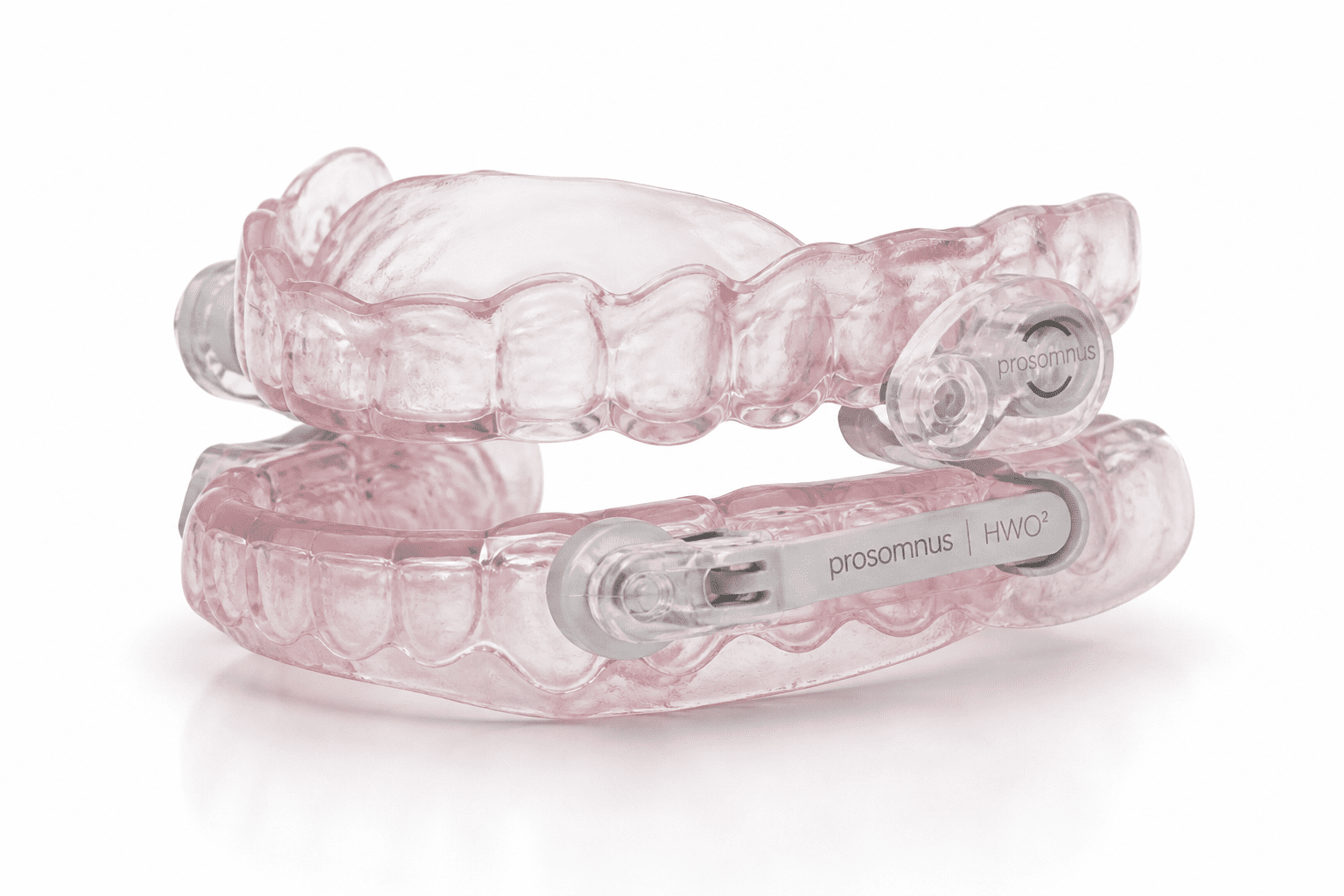
Oral appliance therapy sleep apnea Rogers AR patients are seeking has become one of the most important alternatives for a condition that remains widely underdiagnosed across the United States. An estimated twenty to thirty percent of adults have some degree of obstructive sleep apnea, and the majority remain undiagnosed. For those who do receive a diagnosis, CPAP is typically the first treatment recommended. CPAP is effective, but real-world adherence rates are consistently low.
Studies suggest that between thirty and fifty percent of patients prescribed CPAP, documented in research on CPAP adherence rates and alternatives, do not use it consistently enough to achieve therapeutic benefit. For these patients, and for those with mild to moderate sleep apnea who prefer a less intrusive option, oral appliance therapy sleep apnea Rogers AR represents a well-supported and evidence-based clinical alternative. Those with UARS and undiagnosed sleep-disordered breathing may also benefit from evaluation.
Quick Answer: Oral appliance therapy is a custom fitted dental device that holds the lower jaw forward during sleep to tension pharyngeal tissue and help prevent upper airway collapse, providing a non surgical alternative to CPAP for treating obstructive sleep apnea. The American Academy of Sleep Medicine recommends oral appliance therapy for patients with mild to moderate sleep apnea and for patients of any severity who are intolerant of CPAP or prefer an alternative, based on clinical guidelines that note adherence with oral appliances tends to run higher than with CPAP. Unlike CPAP, oral appliances require no machine, mask, tubing, or electricity, making them more practical for travel and more comfortable for many patients. One 2026 longitudinal study found oral appliance patients averaged close to six hours of nightly wear at one year, with the majority meeting the standard adherence threshold. Restorative Wellness Center coordinates with your sleep physician for initial diagnosis and post treatment sleep testing to confirm therapeutic efficacy objectively rather than assuming effectiveness. The phonetic bite technique used at the practice positions your jaw based on natural comfort zones rather than standard protrusion percentages, reducing jaw pain and bite changes common with conventional appliances.
Table of Contents
How Oral Appliance Therapy Sleep Apnea Rogers AR Patients Use Actually Works
An oral appliance for sleep apnea is a custom-fitted device worn in the mouth during sleep. It works by holding the lower jaw in a slightly forward position, which tensions the soft tissue of the pharynx and prevents the airway from collapsing during sleep. Unlike CPAP, it requires no machine, no mask, no electricity, and no maintenance beyond basic cleaning. It fits in a small case and is easily transported.
Most patients pursuing oral appliance therapy sleep apnea Rogers AR providers prescribe find it significantly easier to adapt to than CPAP, particularly for travel or for patients who sleep in positions that make mask use uncomfortable.
AASM-Recommended: What the Research Shows
The AASM oral appliance therapy guidelines recommend oral appliance therapy as a first-line treatment for mild to moderate obstructive sleep apnea and as a recommended alternative for patients with severe apnea who cannot tolerate CPAP.
This recommendation is supported by a substantial body of research demonstrating meaningful improvements in apnea-hypopnea index, oxygen saturation, sleep quality, and daytime function in patients treated with well-fitted oral appliances. For many patients, oral appliance therapy sleep apnea Rogers AR produces outcomes comparable to CPAP with substantially better nightly compliance, and a compliant suboptimal treatment outperforms an optimal treatment that is not being used.
A Medical Model Approach to Oral Appliance Delivery
Oral appliance therapy sleep apnea Rogers AR patients receive at Restorative Wellness Center is delivered through a collaborative process that includes a sleep physician for diagnosis and follow-up testing. Efficacy is confirmed through post-treatment sleep testing, not assumed. This medical model approach ensures the device is not only comfortable but is producing measurable improvement in airway patency and sleep quality. Patients who have failed CPAP, been told they are borderline, or who simply want a more comfortable long-term option are appropriate candidates for evaluation.
The Phonetic Bite Difference at Restorative Wellness Center
The quality of oral appliance therapy sleep apnea Rogers AR patients receive depends heavily on how the device is made. The jaw position built into the device determines both how well it works and how comfortable it is to wear.
At Restorative Wellness Center in Rogers, Arkansas, we use the phonetic bite technique to determine the optimal jaw position for each patient individually. This method identifies the jaw position the patient’s own nervous system accepts as comfortable and stable, rather than using a standard percentage of maximum protrusion that may or may not align with the patient’s natural resting position. The result is an appliance that reduces the risk of sleep apnea appliance and jaw pain, bite changes, and morning soreness that are common side effects of appliances made with conventional positioning methods.
Outcome monitoring is an equally important part of oral appliance therapy that is frequently omitted in general dental settings. An appliance that fits well and feels comfortable does not automatically mean the airway is being maintained effectively during sleep.
At Restorative Wellness Center, we coordinate with sleep medicine providers to verify treatment effectiveness through objective testing after appliance delivery, confirming that the device is achieving its intended therapeutic purpose and that the patient’s apnea is adequately controlled before the case is considered complete. If you have been diagnosed with sleep apnea or suspect you may have a sleep-breathing disorder, oral appliance therapy sleep apnea Rogers AR may be an appropriate and effective path forward.
Frequently Asked Questions
How do I know if I’m a candidate for oral appliance therapy?
The American Academy of Sleep Medicine recommends oral appliance therapy for patients with mild to moderate obstructive sleep apnea and as an alternative for patients of any severity who are intolerant of CPAP. A sleep physician diagnoses sleep apnea through sleep testing and determines baseline severity. A dentist or dental sleep medicine specialist then assesses whether anatomy, bite relationship, and jaw joint health support successful appliance therapy. Patients with adequate mouth opening, stable dental health, and no severe pre existing temporomandibular joint pathology generally make excellent candidates. Those with significant active periodontal disease or very limited mouth opening may require preliminary treatment. A specialist will discuss candidacy based on specific sleep apnea severity, anatomical factors, and treatment preferences.
Will an oral appliance change my bite permanently?
Conventional oral appliances using fixed high protrusion percentages can produce lasting bite changes in some patients because the jaw is held in an unnaturally aggressive forward position throughout sleep. The phonetic bite technique used at Restorative Wellness Center reduces this risk by positioning the jaw in naturally comfortable zones identified through speech sound analysis rather than forcing extreme protrusion. Even with this approach, gradual minor bite changes may occur over months with any nightly appliance, particularly in patients with ligament laxity. Regular follow up appointments allow a specialist to monitor bite relationship and make adjustments to help prevent progressive shifts. Many patients find that treating underlying sleep apnea and bruxism with an appropriately fitted appliance actually improves bite stability compared to the progressive changes caused by untreated sleep bruxism.