
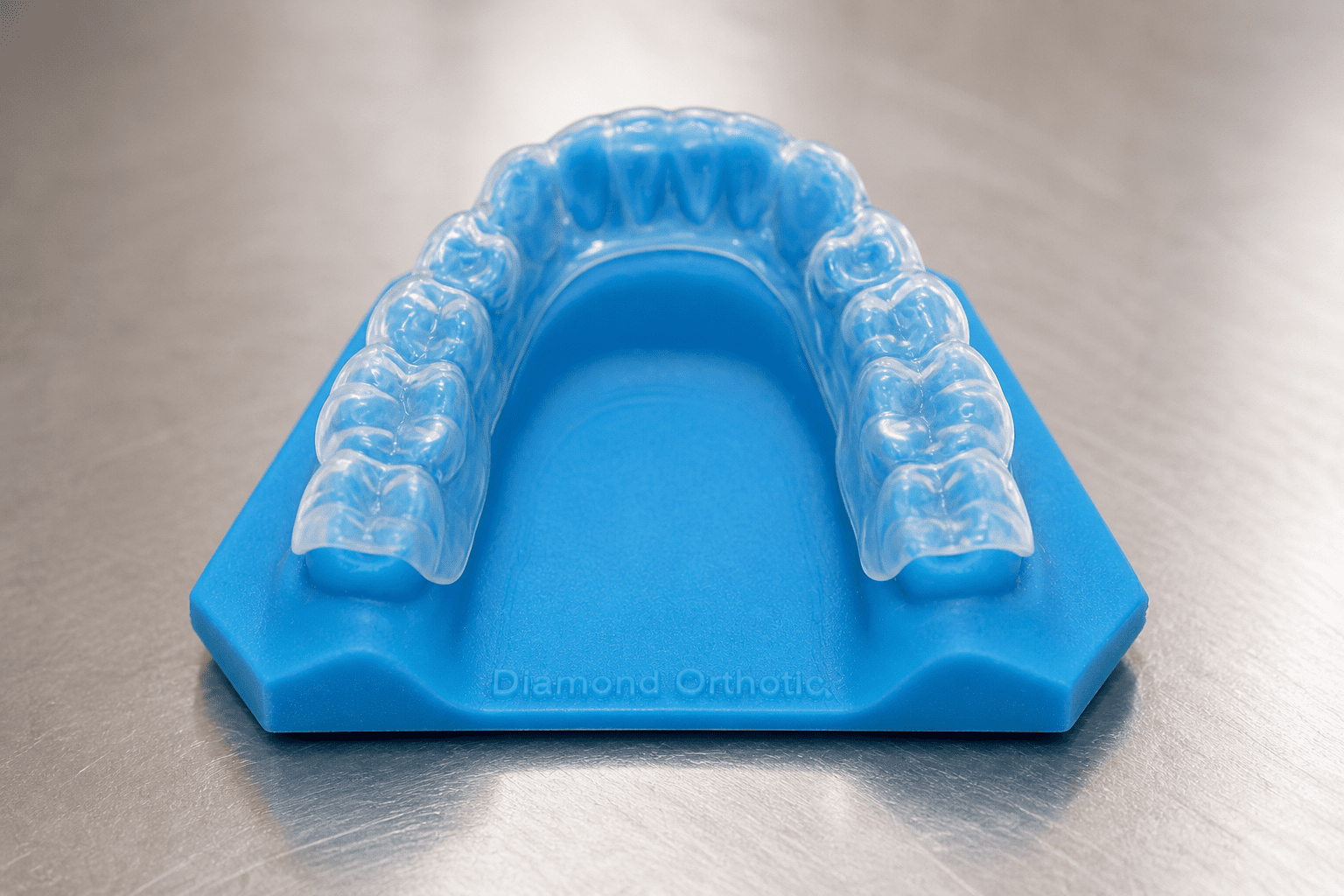
The term nightguard is familiar to most dental patients. It is one of the most commonly prescribed devices in general dentistry, recommended for patients who grind or clench their teeth during sleep. What is less commonly understood is that a nightguard and a TMJ decompression appliance Rogers AR are not the same device, do not share the same clinical goal, and are not interchangeable for patients with structural jaw joint problems. Using one when the other is clinically indicated is one of the most common reasons patients fail to improve with appliance therapy despite years of consistent use.
Quick Answer: A night guard is a flat protective layer between your teeth designed primarily to distribute grinding forces and protect tooth surfaces from wear, but it does not reposition the jaw or decompress the temporomandibular joint. A temporomandibular joint decompression appliance is designed to reposition the lower jaw to reduce compressive forces on the joint, creating space for disc repositioning and tissue recovery based on clinical examination, imaging, and neuromuscular analysis. When patients with jaw clicking, joint pain, or limited mouth opening see no improvement from a night guard, the issue is often that they need joint decompression rather than tooth protection. Imaging including cone beam computed tomography helps determine condylar position and joint space, guiding whether appliance therapy focused on joint decompression is appropriate. Patients often improve significantly when switched from a night guard to an appropriate decompression appliance because the appliance finally addresses the underlying joint problem rather than just protecting teeth.
Table of Contents
What a Nightguard Actually Does
A nightguard, in its standard form, is a flat occlusal splint that places a protective layer of acrylic between the upper and lower teeth. Its primary function is to distribute the forces of grinding and protect the tooth surfaces from wear. It does not reposition the jaw. It does not decompress the temporomandibular joint.
In some designs, it does not alter the resting position of the condyle within the joint space at all. For a patient whose primary problem is tooth wear from clenching, a nightguard may be an appropriate conservative option. For a patient with disc displacement, condylar compression, or degenerative joint changes, a nightguard does not address the structural problem and may in some cases increase joint loading depending on its design and the patient’s jaw anatomy.
How a TMJ Decompression Appliance Rogers AR Is Different
A TMJ decompression appliance in Rogers, AR is designed with a specific clinical goal: to reposition the lower jaw in a way that reduces compressive forces on the temporomandibular joint, creates space within the joint for disc repositioning and tissue recovery, and allows inflamed and damaged structures to heal in a mechanically favorable environment.
The jaw position built into the appliance is determined by clinical examination, cone beam CT imaging findings, and in many cases, neuromuscular analysis, not by a standard protocol applied to every patient. The design, thickness, and coverage of the appliance are all variables that affect how much decompression is achieved and how well the patient tolerates the device.
Why the Clinical Distinction Matters
The distinction matters clinically because joint compression and tooth wear are different problems requiring different solutions. A patient who has been wearing a nightguard for two years without improvement in jaw pain, clicking, or headaches is not a treatment failure, they may simply have been using the wrong tool for the wrong problem. The appropriate question is not why the nightguard is not working but whether this is the right appliance for what this patient’s joint actually needs. This requires imaging. A clinical examination alone cannot determine condylar position, joint space, or the degree of compression that a TMJ decompression appliance Rogers AR needs to address.
What Patients Experience When Switched to the Right Appliance
Patients who transition from a standard nightguard to a properly designed TMJ decompression appliance in Rogers, AR frequently report improvement in joint pain, reduction in morning headaches, and decreased clicking within the first weeks of use, not because the new appliance is better in some generic sense, but because it is addressing the mechanical problem the joint actually has. The appliance is matched to the pathology rather than applied as a default intervention. Appliance design is matched to imaging findings rather than to symptom presentation alone.
Appliance Selection at Restorative Wellness Center Rogers AR
At Restorative Wellness Center in Rogers, Arkansas, appliance selection is based on what the clinical and imaging findings indicate, not on a default recommendation. Every patient who presents for a TMJ evaluation receives cone beam CT imaging to assess the joint before any appliance is prescribed. Patients who have worn a nightguard for months or years without improvement are frequently candidates for a TMJ decompression appliance Rogers AR with a fundamentally different mechanical goal. Patients presenting with jaw clicking or morning headaches and jaw pain are among those most commonly found to have compressive joint pathology on imaging. The first step is understanding what is actually happening inside the joint.
Frequently Asked Questions
How do I know if I need a decompression appliance instead of a night guard?
Joint pain, clicking, or limited opening that doesn’t improve after wearing a night guard suggests joint dysfunction requiring decompression rather than a tooth protection problem. Morning headaches, jaw stiffness, or progressive symptoms despite night guard use indicate that jaw positioning is the underlying issue. If imaging shows the jaw position is abnormal, the disc appears displaced, or the joint space is reduced, a decompression appliance designed to reposition the jaw would be more appropriate than a flat night guard. A specialist should review imaging and perform examination to determine whether standard tooth protection or therapeutic jaw repositioning addresses the specific problem. Many patients with temporomandibular dysfunction see no improvement with a night guard not because night guards are ineffective generally, but because they have joint pathology requiring a different appliance design.
Can a decompression appliance help if I also have sleep apnea?
Decompression appliances designed for temporomandibular joint treatment can also improve airway opening by positioning the lower jaw forward, making them beneficial for patients with concurrent sleep apnea and jaw joint dysfunction. Unlike standard night guards that maintain the jaw in its normal resting position, decompression appliances reposition the jaw forward to create more airway space while also reducing joint loading. This can make them particularly valuable for patients whose sleep apnea and temporomandibular dysfunction occur together. A sleep specialist and dental specialist should collaborate on appliance design to ensure the device addresses both joint decompression needs and airway opening requirements. Many patients achieve good treatment outcomes when their appliance is designed to address both joint positioning and airway support together rather than treating these conditions separately.