
Table of Contents
Regenerative medicine has transformed the management of musculoskeletal conditions across multiple specialties, and its application to the temporomandibular joint represents one of the most significant advances in nonsurgical TMJ care in recent years. PRF therapy TMJ Rogers AR, platelet-rich fibrin, is prepared entirely from the patient’s own blood. It concentrates platelet derived growth factor, transforming growth factor beta 1 and vascular endothelial growth factor above the levels found in whole blood, and releases them more slowly than platelet rich plasma.
Quick Answer: Platelet rich fibrin (PRF) therapy is prepared from your own blood and concentrates growth factors above the levels found in whole blood, for injection into the temporomandibular joint. It is one of the options we consider when imaging shows joint findings and conservative treatment has not helped enough. PRF therapy is indicated when conservative treatments like appliance therapy, physical therapy, and medications have not produced lasting relief from joint pain and dysfunction. Treatment typically involves several sessions spaced over a few weeks to allow tissue response between injections, often combined with decompression appliances and laser therapy. Patients with confirmed joint pathology shown on imaging who haven’t benefited from conservative measures are the strongest candidates for PRF therapy.
When Conservative TMJ Treatment Is Not Enough
For patients who have tried appliance therapy, physical therapy, anti-inflammatory medications, or corticosteroid injections without lasting relief, PRF is a different kind of option. It is prepared from the patient’s own blood and delivered into the joint itself rather than taken systemically.
How PRF Therapy TMJ Rogers AR Works
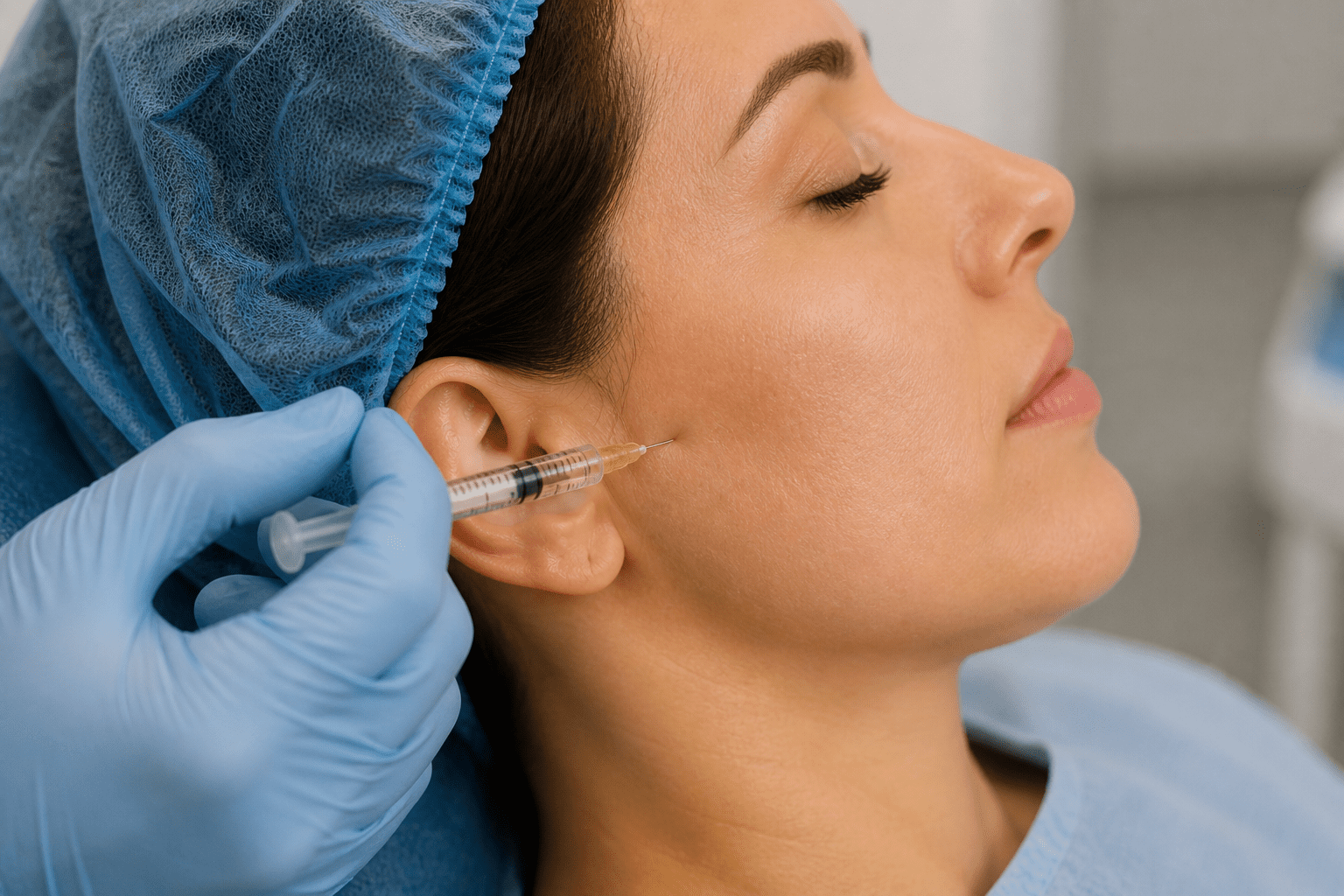
The procedure begins with a small blood draw at the time of the appointment. The blood is processed through centrifugation, which separates and concentrates the platelets, growth factors, and fibrin naturally present in the sample. The resulting preparation is then injected directly into the temporomandibular joint, where the growth factors are released over time into the surrounding tissue.
The preparation concentrates platelet derived growth factor, transforming growth factor beta 1 and vascular endothelial growth factor above the levels found in whole blood. Because it is made from the patient’s own blood, there is no donor material and no outside laboratory.
How PRF Differs From a Corticosteroid Injection
PRF therapy TMJ Rogers AR differs from a corticosteroid injection in what it is made of. A corticosteroid is a manufactured anti-inflammatory drug. PRF is prepared from the patient’s own blood at the time of the visit.
The second-generation PRF preparations used at Restorative Wellness Center are processed without anticoagulants. The slower spinning process produces a fibrin scaffold that PRP does not, which is why Dr. Benton reaches for it when a longer acting matrix is the goal.
Which Patients Are Candidates for PRF TMJ Therapy
The clinical indication for PRF therapy TMJ Rogers AR is confirmed joint pathology, typically condylar degeneration, chronic synovial inflammation, or structural breakdown identified on cone beam CT imaging that has not responded adequately to appliance therapy and other conservative measures. Patients with active joint inflammation that has persisted despite conservative management, those with imaging findings showing condylar erosion or early degenerative changes, and those who have not achieved adequate relief through other nonsurgical approaches are among the most appropriate candidates.
PRF Treatment Protocol at Restorative Wellness Center
Treatment is delivered over 2 to 3 sessions as part of a comprehensive plan that may include decompression appliance therapy, laser therapy, and other supportive interventions. The sessions are spaced to allow the tissue response from each injection to develop before the next is administered.
PRF therapy is not appropriate for every TMJ patient, and candidacy is determined through a thorough clinical and imaging evaluation at Restorative Wellness Center in Rogers, Arkansas. for patients with the right profile it is a nonsurgical option to discuss, alongside the rest of the plan for joint health.
Frequently Asked Questions
How does PRF differ from PRP (platelet rich plasma) injections?
Both PRF (platelet rich fibrin) and PRP (platelet rich plasma) are concentrated from a blood sample, and they differ in processing. PRF’s slower spinning process produces a fibrin scaffold that PRP does not, which is why Dr. Benton reaches for it when a longer acting matrix is the goal. PRF releases growth factors more slowly than PRP. A specialist can discuss whether PRF, PRP, or other regenerative approaches are most appropriate for a specific joint condition and treatment goals.
What imaging confirms candidacy for PRF therapy?
Cone beam computed tomography (CBCT) imaging shows whether the joint has degenerative changes, cartilage loss or bone surface irregularities. A specialist reviews the imaging to confirm that the joint pathology, such as condylar degeneration or chronic inflammation, represents a structural problem amenable to regenerative treatment. Conservative treatments that haven’t produced improvement over weeks to months also support PRF candidacy. A specialist will discuss the imaging findings and whether PRF or another approach is the better fit for your case. Some patients benefit from trying additional conservative measures first, while others with significant joint damage may be ready for regenerative therapy.