Table of Contents
When patients with TMJ disorders do not respond adequately to appliance therapy, physical therapy, or anti-inflammatory treatment, the question becomes what is actually driving the ongoing pain and dysfunction. In a significant subset of patients, the answer is joint laxity — a condition in which the ligaments supporting the temporomandibular joint have become stretched, weakened, or insufficiently supportive, allowing excessive and abnormal movement of the condyle within the joint space. Prolotherapy TMJ Rogers AR is a regenerative injection technique designed to address this problem directly, and it represents one of the most targeted nonsurgical options available for laxity-driven joint instability.
Quick Answer: Prolotherapy is a regenerative treatment that strengthens stretched or weakened ligaments in the temporomandibular joint by injecting a dextrose based solution to stimulate the body’s natural healing response. This treatment is specifically indicated for patients with confirmed joint laxity, where excessive ligament laxity causes pain, clicking, and a chronic cycle of microtrauma that conservative treatment alone cannot resolve. Treatment typically involves three to six sessions spaced several weeks apart, with progressive improvement often apparent after the second or third injection. Unlike corticosteroid injections, which calm inflammation temporarily, prolotherapy works by stimulating the body’s own collagen production to rebuild ligament strength over time.
3 Signs Joint Laxity May Be Driving Your TMJ Symptoms
This instability produces pain, clicking, locking, and a chronic cycle of microtrauma that prevents the joint from healing despite conservative management. The joint moves too much, the surrounding structures cannot stabilize it, and every functional movement of the jaw — chewing, speaking, yawning — perpetuates the injury cycle.
Standard treatments that focus on reducing inflammation or repositioning the disc do not address the ligamentous insufficiency that is allowing the abnormal movement in the first place. If appliance therapy and other conservative measures have not produced adequate stabilization, laxity should be evaluated as a primary driver.
How Prolotherapy TMJ Rogers AR Rebuilds Joint Stability
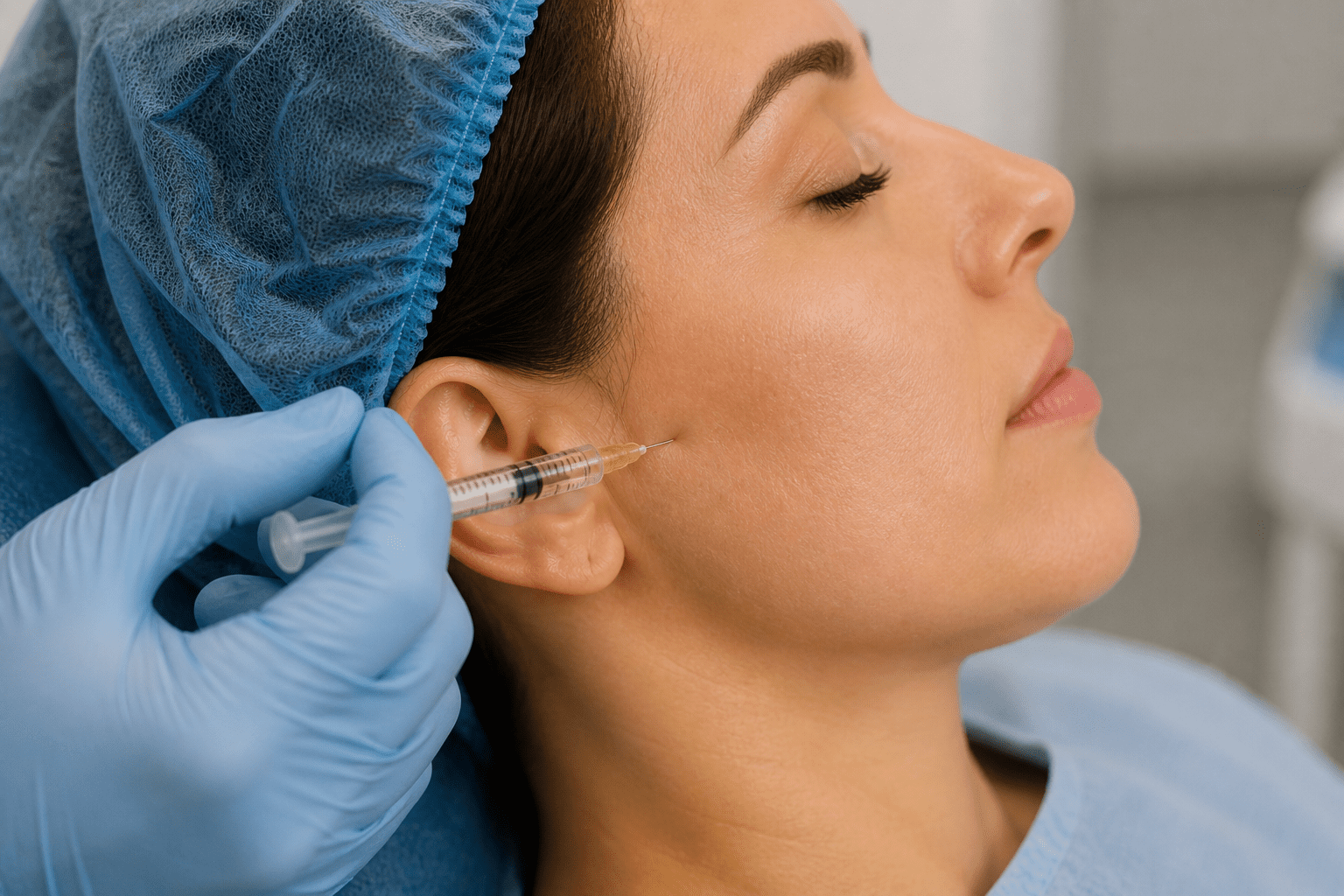
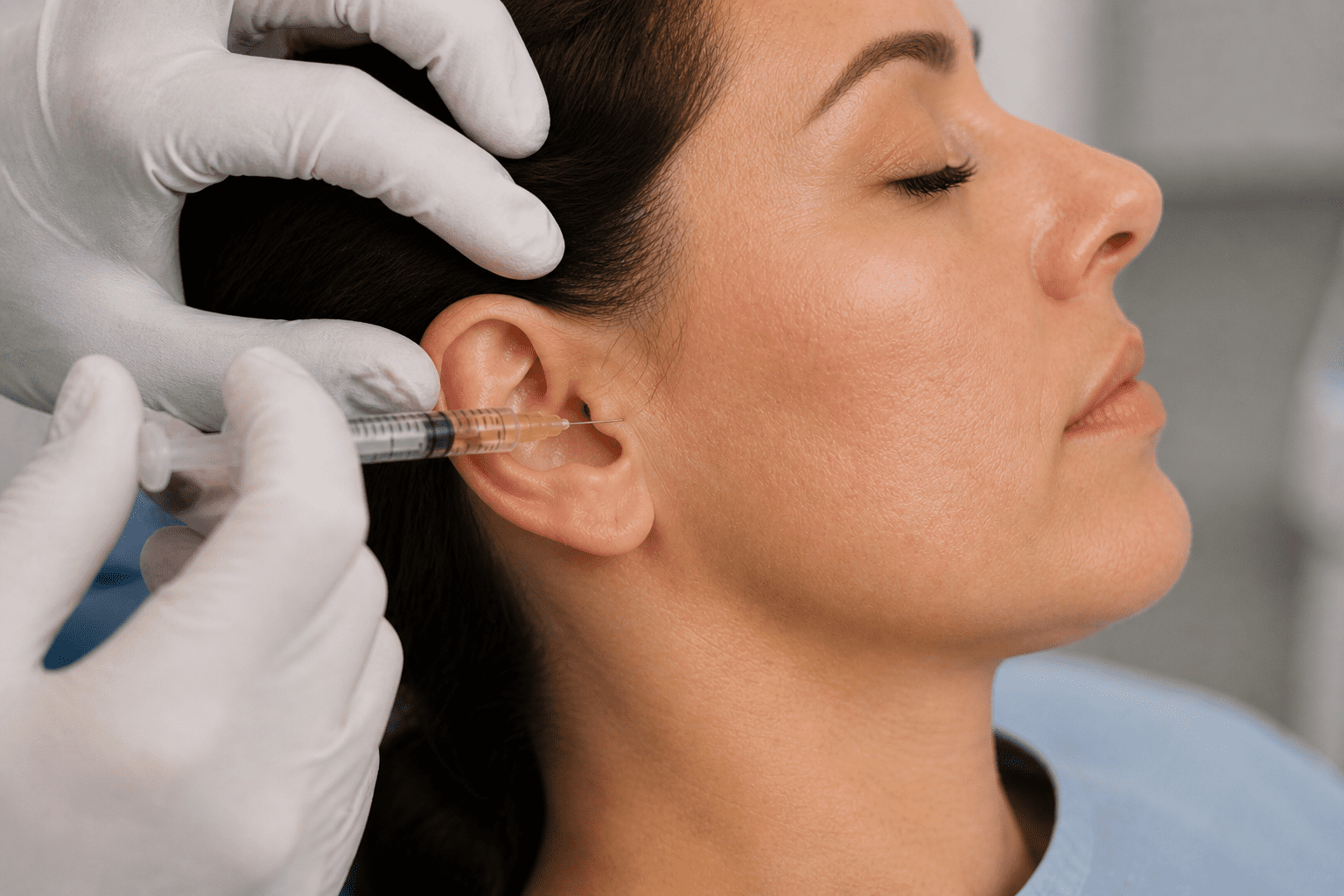
Prolotherapy involves the injection of a concentrated solution — most commonly a dextrose-based preparation — into the ligaments and joint capsule of the temporomandibular joint. The solution creates a controlled localized response that stimulates fibroblast activity and connective tissue proliferation — in effect, prompting the body to rebuild and strengthen the ligamentous support structures that have become insufficient.
Unlike corticosteroid injections, which reduce inflammation temporarily but can weaken connective tissue with repeated use, prolotherapy TMJ Rogers AR is intended to improve the structural integrity of the joint over a series of treatment sessions. Research on dextrose prolotherapy for TMJ hypermobility supports progressive improvement in joint stability and pain reduction across treatment courses.
What to Expect: Treatment Course and Timeline
Patients typically undergo a series of three to six prolotherapy sessions spaced several weeks apart. Improvement in joint stability and symptom reduction tends to be progressive, with many patients reporting meaningful change after the second or third session.
The treatment requires patience — it is not a rapid pain blocker — but for patients whose laxity has been identified as a primary driver of their ongoing symptoms, the progressive restoration of joint stability addresses the problem in a way that symptom-focused treatments cannot. Some patients experience temporary soreness in the days following each injection as the localized response resolves — this is a normal part of the process and not a sign of adverse reaction.
Who Is a Candidate for Prolotherapy TMJ Rogers AR
Prolotherapy TMJ Rogers AR is not appropriate for every TMJ patient — the clinical indication is specifically joint laxity confirmed by examination findings and supported by imaging. Patients with primarily muscular TMD, disc displacement without a laxity component, or active infection are not candidates. This is why a thorough diagnostic evaluation including cone beam CT imaging is a prerequisite to recommending prolotherapy at Restorative Wellness Center. The imaging allows us to confirm condylar morphology, rule out other pathology, and ensure that the primary driver of the patient’s symptoms is the laxity component that prolotherapy is designed to treat.
Prolotherapy as Part of a Comprehensive Regenerative Plan
At Restorative Wellness Center in Rogers, Arkansas, prolotherapy TMJ Rogers AR is offered as part of a comprehensive regenerative approach that may also include platelet-rich fibrin therapy, decompression appliance therapy, and laser treatment. These modalities are frequently combined because joint laxity, inflammation, and disc dysfunction often coexist in the same patient. The decision to recommend prolotherapy is based on clinical findings and imaging — not as a first-line treatment, but as a targeted intervention for patients whose joint instability has been identified as the primary driver of their ongoing symptoms and whose conservative treatment course has not produced adequate stabilization.
Frequently Asked Questions
How is prolotherapy different from corticosteroid injections into the TMJ?
Corticosteroid injections deliver anti inflammatory medication that reduces pain and swelling temporarily, typically providing relief for weeks to months before the effect diminishes. Prolotherapy works through a different mechanism: the injected solution stimulates fibroblast activity and connective tissue proliferation, creating new collagen and strengthening the actual ligament structures over time. Prolotherapy produces progressive improvement over multiple sessions as ligaments thicken and strengthen, whereas corticosteroids provide relief without addressing the underlying ligament laxity causing the problem. Because the two treatments work through different mechanisms, a specialist evaluation can determine which approach, or combination, fits a given case of ligament laxity.
How do you know if your TMJ needs prolotherapy rather than other treatments?
Prolotherapy is indicated when examination and imaging confirm ligament insufficiency as the primary driver of symptoms, since not all TMJ dysfunction involves ligament problems. Cases involving primarily muscular dysfunction, uncomplicated disc displacement, or recent infection are not appropriate for prolotherapy. A specialist will use physical examination testing for excessive ligament laxity, cone beam imaging to assess bone structure and ligament space, and sometimes Joint Vibration Analysis to characterize joint dysfunction. A specialist can discuss whether prolotherapy, other regenerative treatments like platelet rich fibrin therapy, or a different approach fits a specific condition.